NIH Websites Are Changing
Director's blog: Strengthening research capacity helps build global health resilience and American leadership
January/February 2026 | Volume 25 Number 1
 Read recent commentary on global health research issues from current and immediate past directors of the Fogarty International Center.
At the Fogarty International Center, we have long championed research 'capacity building' -- the strengthening of research skills, staff, tools, and infrastructure -- as a cornerstone of global health. Our mission is not abstract; it shapes how countries advance health outcomes for all and respond to evolving challenges, thereby creating value for American health security and scientific leadership. A recently published analysis in Annals of Global Health provides timely, data-driven evidence reinforcing this perspective.
In this multi-country analysis, co-author Shirley Kyere and I examined national health research activity in the years immediately preceding COVID-19 and assessed how those same countries contributed to global research output during the early years of the crisis. As seen in the Figure (below), the findings are striking: countries with stronger pre-existing research capacity (X-axis) produced substantially more research during the emergency period (Y-axis) than countries with weaker capacity. This association is stronger than correlations with GDP, population size, or disease burden. In short, research capacity matters — and it matters decisively.
These results validate what Fogarty and our partners have observed for decades. Research capacity built in advance enables countries to generate evidence rapidly when new health challenges arise. It allows institutions to pivot and answer urgent questions—not by creating systems from scratch but by redeploying trained people, laboratories, data platforms, and collaborative networks. Importantly, this capacity is not disease specific. Skills developed through work on HIV, tuberculosis, noncommunicable diseases, or maternal and child health are readily transferable when circumstances change.
Evidence from broader research capacity literature illustrates how this pivot happens in practice. A report we published in the American Journal of Tropical Medicine and Hygiene highlights how countries with established laboratory networks and trained scientific personnel were able to repurpose existing infrastructure during health emergencies to support diagnostic testing, genomic sequencing, and operational research. In multiple settings, laboratories originally strengthened for routine disease surveillance were rapidly adapted to characterize emerging pathogens, while locally trained researchers shifted their focus to outbreak-related clinical studies and data analysis. These transitions were possible not because of emergency-specific investments, but because core research systems were already in place. In Jamaica, for example, prior Fogarty-supported training in virology at the University of the West Indies enabled Professor John Lindo and colleagues to pivot rapidly to COVID-19 research and diagnostics, leading to the establishment of in-country genomic sequencing capacity that provided timely data to inform national public health decisions.
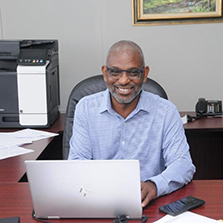 Photo courtesy of Peter KilmarxProfessor John Lindo, University of the West Indies
The contrast is instructive. Where such capacity was limited, countries faced delays in generating local evidence, often relying on external actors to define research priorities and interpret findings. Where capacity was stronger, local investigators led studies, informed national decision-making, and contributed knowledge to the global scientific community.
This distinction reinforces a central lesson from the Annals of Global Health analysis: preparedness is cumulative. It is built over time through sustained investment in people and institutions, not assembled in response to a crisis.
This framing also helps move the discussion beyond narrow conceptions of preparedness. Health emergencies are not isolated events; they sit along a continuum of evolving health challenges. Research capacity strengthens health systems’ ability to respond to uncertainty, whether that uncertainty arises from emerging infections, changing disease patterns, environmental stressors, or demographic transitions. Countries with strong research ecosystems are better positioned to adapt across this spectrum.
Importantly, this approach aligns squarely with an America First global health strategy. Investments in global research capacity do not detract from U.S. interests, they reinforce them. Stronger research partners abroad enhance global surveillance, accelerate scientific discovery, and improve access to timely data that inform policy, guide practice, and drive public health impact, preventing diseases from crossing borders and ultimately protecting Americans at home. Partnerships expand the global pool of scientific talent and create opportunities for additional collaborations that advance U.S. research leadership and economic competitiveness.
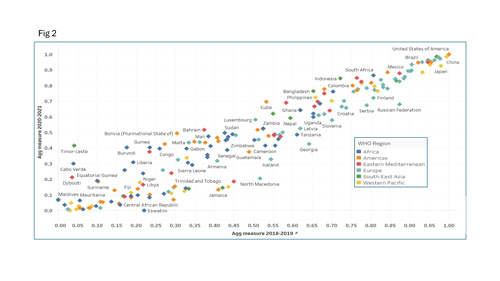 Photo courtesy of Peter KilmarxScatterplot of National Aggregate Metric of pre COVID research activity 2018–19 vs. National Aggregate Metric of COVID 19 related research output, 2020–21 in countries with population >100,000 (N = 180) [Click to see larger image]
From this perspective, research capacity building is neither charity nor concession. It is a strategic investment that delivers shared benefits. Countries with the ability to generate and use evidence locally are more reliable partners, more effective contributors to global science, and better equipped to manage health threats before they escalate and begin to travel across borders.
Fogarty helps make that capacity durable. Through long-term training programs, institutional partnerships, and support for ethical and regulatory systems, we help researchers and institutions build the skills and infrastructure needed to lead their own research agendas. These investments may not always be visible in the moment, but their value becomes unmistakable when circumstances demand rapid adaptation.
As we look ahead, Fogarty’s mission remains clear. By strengthening research ecosystems around the world, we help ensure that when health challenges emerge — wherever they arise — the response is faster, more grounded in evidence, and more fair. Building research capacity is not only central to global health resilience, it is also crucial to American leadership in science worldwide.
More information
Updated February 17, 2026
To view Adobe PDF files,
download current, free accessible plug-ins from Adobe's website.