NIH Websites Are Changing
Fogarty's Center for Global Health Studies catalyzed NIH investments
January/February 2026 | Volume 25 Number 1
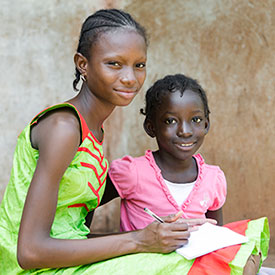 Photo courtesy of borgogniels/istock/Thinkstock
The Adolescent HIV Prevention and Treatment Implementation Science Alliance (AHISA) has been a successful CGHS program.
Photo courtesy of borgogniels/istock/Thinkstock
The Adolescent HIV Prevention and Treatment Implementation Science Alliance (AHISA) has been a successful CGHS program.
One fruitful initiative has revealed what the Fogarty International Center does best. The Center for Global Health Studies (CGHS), introduced in 2012, aimed to catalyze research investments at the National Institutes of Health (NIH) by addressing health challenges through multidisciplinary and multi-sector dialogue, collaboration, and training. The center achieved its goals by systematically gathering information and then convening experts to set a research agenda and develop activities around emerging topics.
“The original intention for CGHS was to create a space for scholars to come and work on various topics engaging across NIH with Fogarty as their base. When Dr. Roger Glass (Fogarty’s former Director) asked me to lead it, I was eager to do more with it,” says CGHS’ former director, Nalini Anand, JD, MPH, now managing director of Georgetown University’s Global Health Institute. Specifically, Anand harnessed Fogarty’s unique ability to bring NIH institutes and other partners together around common challenges and interests.
Tangible outputs
Anand's vision proved true: CGHS has engaged more than 70 partners over time, including numerous other NIH institutes and centers; U.S. government agencies; foundations; global and U.S. academic institutions; multilateral organizations; and non-governmental organizations. These powerhouse partners collaborated with CGHS on various projects, 26 in total, ranging across several topic areas. Behavioral economics, childhood obesity prevention, mHealth research training, and tobacco control are among the many topics explored by CGHS. Implementation science and research capacity strengthening were common cross-cutting themes.
“We really focused on impact and engaging end-users from the beginning,” says Anand. “To operationalize this, we formed steering committees that included NIH partners, US and LMIC scientists and other relevant organizations, all of whom would benefit from the deliverables of the projects.” She adds the aim of each project was tangible outputs, which would either move the field forward (such as catalyzing research collaborations) or provide a resource for scientists (such as a toolkit or training). “Importantly, we didn't take on an area or a project if we didn't have two or more interested NIH institutes or centers, we had to have partners if we wanted significant impact—given Fogarty’s small budget, the majority of additional investments would come from other institutes and centers.”
As part of its process, CGHS gathered input from NIH partners to ensure that each project met institutional needs, explains Anand. “For example, we would try to understand other institutes’ questions around a particular topic and then we’d make sure the activity addressed those questions…and ensure that the right people were in the room to address them. Being small and nimble allowed CGHS to always have ears and eyes open to where the next opportunity might be.”
Measuring success
By a variety of measures, CGHS achieved its goals. Its 26 projects contributed to sustained capacity strengthening through mentorship, publication opportunities, workshops, and trainings across five continents. The projects also led to 220 collaborative publications in 51 journals, each with multi-country authorship. In turn, these publications have been cited 10,000 times, further influencing research.
Beyond the stats, Anand recalls how Dr. Echezona Ezeanolue, a participant in CGHS’ Prevent Mother-to-Child Transmission (PMTCT) Implementation Science Alliance, started his own Nigerian Implementation Science Alliance at the University of Nigeria Nsukka. “He harnessed the PMTCT Alliance model but designed it as a locally sustainable initiative.” Another example: a CGHS mHealth Training Institute faculty member teamed up with a participant to run a similar institute in Kenya. They planned, designed, and implemented it themselves, though, in this case, Fogarty provided a supplemental award in support of the institute.
“For me, these locally sustainable outcomes are the ultimate hope and dream of what CGHS (and NIH) can do,” says Anand.
Highlighted projects
Impressive CGHS projects are too many to name, however the Adolescent HIV Prevention and Treatment Implementation Science Alliance (AHISA), a sequel project to the PMTCT Implementation Science Alliance, is a standout. Alliance members contributed to more than 1,200 peer-reviewed publications and received over $75,000,000 in follow-on NIH funding attributable to their AHISA work. Research findings from the alliance informed program and policy changes in three countries leading to the adoption of evidence-based guidelines and initiatives that can improve health. Finally, AHISA, which was developed and led by Fogarty’s Rachel Sturke, PhD, and Susan Vorkoper, PhD, also helped train and mentor more than 250 people and resulted in 85 new institutional partnerships.
A more recent project, Artificial Intelligence (AI) for Health Research in Low-Resource Settings Globally, showed how CGHS contributed to larger NIH interests. “The goal for the project was to take a look at how NIH was investing in AI-enabled health science, and, in particular, what's happening in low and middle-income country (LMIC) settings that would present opportunities for Fogarty's leadership,” says Fogarty’s Senior Scientist Andrew Forsyth, PhD, who led the project.
Forsyth’s analysis found that of NIH’s 1,850 active AI health research grants, 97 focused on LMICs, representing $40.2 million of the total $1.66 billion portfolio, as of January 2025. “I was afraid that the LMICs were being left behind, so I was thrilled to see that wasn't the case—there was a lot of comparability between the U.S. and the LMIC settings.” Compared to high income country (HIC) studies, LMIC-based studies emphasized diagnostics and treatment, health system optimization, disease surveillance and outbreak response, and telemedicine and remote care.
However, there are “many percentage points difference” between the proportion of LMIC-based studies of ethics and data governance, and capacity strengthening, and the proportion of HIC-based studies of these same topics, says Forsyth. Clearly, these are areas where Fogarty might help close gaps. “It would be beneficial to Americans to have a broader sampling of genetic diversity, given different prevalences of common diseases in LMICs.” Recently, Forsyth presented his analysis of this CGHS internally at the NIH AI Summit. “My hope is to bring this knowledge to the broader NIH community, to use this knowledge to inform priorities at NIH broadly, and to ensure that AI-enabled health science benefits us all.”
DS-I Africa inspiration
Finally, another remarkable CGHS initiative is its State of Data Science for Health in Africa Writing Project. In December 2022, Fogarty brought together African researchers in the fields of data science, bioinformatics, epidemiology, ethics, and biostatistics to develop a collection of scientific papers for publication in the Nature portfolio of journals (Springer Publishing). Attendees included guests from various organizations including the Gates Foundation, Wellcome, and the Network of African Medical Librarians.
This project, which was inspired by the Data Science for Health Discovery and Innovation in Africa (DS-I Africa) Initiative, developed a series of commentaries, opinion pieces, and reviews that revolve around enhancing health data infrastructure and utilization in Africa. The manuscripts collectively highlight critical themes in African health data and research, emphasizing the need for digitization, standardization, and fair data-sharing cultures, alongside strategic funding, to fully leverage data science for improved health outcomes across the continent and beyond. Nature is currently building a landing page on its website for the collection, noted Fogarty Program Director Laura Povlich, PhD, a Fogarty program director and DS-I Africa coordinator, who helped establish the writing project with Amit Mistry, PhD, former senior scientist at CGHS.
Anand concludes, “CGHS has been a proven vehicle for bringing NIH institutes—siloed NIH institutes—together around common goals and interests and leveraging their respective strengths, expertise, and resources to further the agenda around those goals.”
More information
Updated February 13, 2026
To view Adobe PDF files,
download current, free accessible plug-ins from Adobe's website.