NIH Websites Are Changing
People in global health news
January/February 2026 | Volume 25 Number 1
Langevin retires from the National Center for Complementary and Integrative Health
Helene M. Langevin, MD, director of NIH’s National Center for Complementary and Integrative Health (NCCIH), has retired from federal service. Since assuming the role in 2018, she’s led several NIH-wide initiatives to address chronic disease in the U.S. This includes the Whole Person Reference Physiome and Coordination Center, led by NCCIH and co-funded by 20 NIH institutes, centers and offices, which aimed to create a network map of healthy physiological function. Previously, Langevin was director of the Osher Center for Integrative Medicine, jointly based at Brigham and Women’s Hospital and Harvard Medical School; a professor-in-residence of medicine at Harvard Medical School; and a professor of neurological sciences at the University of Vermont Larner College of Medicine, which Langevin has rejoined to help build a research program.
Woychik appointed to NIH’s Make America Healthy Again strategy
Richard Woychik, Ph.D., will serve as senior advisor for NIH’s Make America Healthy Again strategy. In this role, he will support efforts to identify the root causes of chronic disease, strengthen the nation’s health resilience, and promote fair, data-driven prevention strategies. Since June 2020, Woychik served as Director of the National Institute of Environmental Health Sciences (NIEHS) and the National Toxicology Program. Under his leadership, NIEHS worked to advance the knowledge of exposomics (the science of understanding how the environment affects health across the lifespan), precision environmental health, the health impacts of extreme weather, and data science.
Koroshetz steps down from National Institute of Neurological Disorders and Stroke
Walter J. Koroshetz, MD, concluded his service as director of the National Institute of Neurological Disorders and Stroke (NINDS) on January 24. Koroshetz played a central role in leading the NIH BRAIN Initiative, a guide for challenging research that has expanded the ability to map brain cells and circuits, link neural activity to behavior, and lay the groundwork for more precise interventions across neurological and psychiatric diseases. Prior to NINDS, Koroshetz served as vice chair of the neurology service and director of stroke and neurointensive care services at Massachusetts General Hospital and professor of neurology at Harvard Medical School. His research career led to the development and validation of imaging techniques and tools that are now commonplace in stroke care. Overall, he played a significant role in the revolution of acute stroke care and the growth of the neurointensive care field.
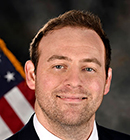
Walsh appointed Director, National Institute of Environmental Health Sciences
Kyle Walsh, PhD, is the new director of the National Institute of Environmental Health Sciences (NIEHS). A leading neuro-epidemiologist, Walsh’s work on glial senescence (the deterioration, with aging, of a type of central nervous system cell) and gliomagenesis (the process leading to the transformation of normal glial cells into cancerous cells) has shed light on how genetic, epigenetic, and environmental factors can interact to influence the development of human disease. Before joining NIEHS, he led an interdisciplinary research program at Duke University. There he studied how the interplay of both heritable and modifiable risk factors can affect brain health, cancer outcomes, and aging. Walsh earned his Ph.D. in chronic disease epidemiology from the Yale School of Public Health and completed postdoctoral training at the University of California, San Francisco. As part of his responsibilities, Walsh will also direct the National Toxicology Program.
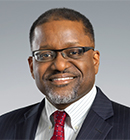
Gibbons retires from the National Heart, Lung, and Blood Institute
Gary H. Gibbons, MD, who served as director of the National Heart, Lung, and Blood Institute (NHLBI) since 2012, has retired from federal service. Under his leadership, NHLBI has made many scientific contributions in the fields of vascular biology, genomic medicine, and the pathogenesis of vascular diseases. The Systolic Blood Pressure Intervention Trial (SPRINT) showed that intensive blood pressure management significantly reduces the risk of death from cardiovascular events. The Cure Sickle Cell Initiative, launched in 2018, helped advance progress towards a cure for sickle cell disease; the FDA approved the first gene therapies for the disease five years later. Prior to joining NIH, he served as the founding director of the Morehouse Cardiovascular Research Institute at the Morehouse School of Medicine, Atlanta. His research focused on investigating how connections between clinical phenotypes, behavior, molecular interactions, and social determinants contribute to cardiovascular disease.
Ramirez wins American Institute of Biological Sciences Award
The American Institute of Biological Sciences (AIBS) announced Julio J. Ramirez, PhD, as the winner of its Innovative Leadership Award, which recognizes commendable, innovative leadership in the biological sciences community. Ramirez is the R. Stuart Dickson Professor and Director of the Neuroscience Program at Davidson College, where he has served since 1986. Ramirez’s research focuses on the recovery of function after central nervous system injury, with an emphasis on determining the functional significance of hippocampal neuroplasticity. Ramirez currently serves as the Chair of the Neuroscience Training Committee at the Society for Neuroscience. His research and teaching efforts have been supported by numerous grants from the National Institutes of Health as well as the National Science Foundation.
Willett honored with a Prince Mahidol Award
Walter C. Willett, MD, MPH, DrPH, received a Prince Mahidol Award for his work in the field of public health. Willett, a Professor of Epidemiology and Nutrition at the Harvard T. H. Chan School of Public Health, is considered a pioneer in modern nutritional epidemiology. One landmark study of his provided the first conclusive evidence linking trans fat consumption to increased risk of coronary heart disease; Willett also demonstrated that fat quality, not total fat quantity, is a key determinant of cardiovascular health risks. His research reinforced the principle that most chronic diseases are preventable through improved diet and lifestyle, and he proposed the “Planetary Health Diet,” which can reduce premature mortality by up to 30%, equivalent to 15 million lives saved per year. He’s a grantee of Fogarty, the National Cancer Institute, and the National Institute of Diabetes and Digestive and Kidney Diseases.
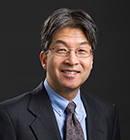
American Society of Tropical Medicine & Hygiene elects Ko as new president
The American Society of Tropical Medicine and Hygiene (ASTMH) announced a new president at its recent, annual meeting held in Toronto. ASTMH named longstanding NIH grantee Albert Icksang Ko, MD, president. Ko is the Raj and Indra Nooyi Professor of Public Health at the Yale School of Public Health and Collaborating Researcher at the Oswaldo Cruz Foundation (Fiocruz), Brazilian Ministry of Health. Previously, he was stationed at Fiocruz in Salvador, Brazil, for 15 years, while serving as a fellow and faculty member of Weill Medical College of Cornell University. He is currently a co-principal investigator of an NIH-supported cluster randomized controlled trial in Brazil, which is evaluating the effectiveness of Wolbachia-infected Aedes aegypti (a modification that reduces a mosquito’s ability to transmit viruses) in reducing infection. Since 2012, he has also helped lead a Fogarty LAUNCH Consortium, which has trained more than 240 postdoctoral and predoctoral fellows in 17 countries.
ASTMH selects three new board members
The American Society of Tropical Medicine and Hygiene (ASTMH) announced new board members at its annual meeting. For its board, ASTMH selected Rebecca C. Christofferson, PhD, a tenured Associate Professor in the Department of Pathobiological Sciences at Louisiana State University (LSU) School of Veterinary Medicine. Since 2007, Christofferson has held multiple leadership roles at ASTMH. Christofferson has conducted research in the areas of chikungunya, dengue, Zika, West Nile, and a spectrum of orthobunya viruses, working in Latin America, Africa, and Southeast Asia. An internationally recognized arbovirologist and epidemiologist, she is a biostatistician for the Louisiana Biomedical Research Network and holds adjunct appointments at LSU School of Public Health and the Milken Institute School at George Washington University. She’s a grantee of the National Institute of General Medical Sciences and the National Institute on Aging.
ASTMH also selected Yazoume Ye, PhD, for its board. Fluent in English and French, Ye has more than 20 years of experience conducting research and establishing policies to strengthen health systems across sub-Saharan Africa. A malaria epidemiologist, he is the founder and executive director of CESMEL Health, Burkina Faso. Previously, he served as Vice President for Malaria at ICF, a global company where he led USAID-funded and President’s Malaria Initiative-funded programs to enhance surveillance and evaluation in more than a dozen countries. He also chairs the Board of Directors at Evidence for Sustainable Human Development Systems in Africa (EVIHDAF), an Africa-led research and development institution. Since joining ASTMH in 2010, he’s held a variety of leadership roles.
Finally, ASTMH elected Muhammad Asaduzzaman, MBBS, MPH, as a board member representing students, trainees, residents and post-docs. He’s a global health researcher and a PhD student at the University of Oslo, Norway. Following his medical training, he started a residency in pediatrics while commencing his public health career at icddr,b, an international health research organization located in Dhaka, Bangladesh, serving as a Nipah surveillance coordinator in that country’s “Nipah belt.” Later, Asaduzzaman completed an MPH at Massey University, New Zealand, working on avian influenza, Nipah, and anthrax as well as multidisciplinary outbreak investigations. He’s a former visiting scholar at Vanderbilt University and a former Fogarty fellow, who studied One Health transmission dynamics of antimicrobial resistance.
Updated February 24, 2026
To view Adobe PDF files,
download current, free accessible plug-ins from Adobe's website.