NIH Websites Are Changing
Q&A: Joseph Zunt, MD Serendipity in life & work
January/February 2026 | Volume 25 Number 1
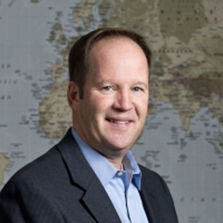 Photo courtesy of UW Medicine
Dr. Joseph Zunt
Photo courtesy of UW Medicine
Dr. Joseph Zunt
Joseph Zunt, MD, is a Professor of Global Health at the University of Washington School of Public Health and a Professor of Neurology at the University of Washington School of Medicine, Professor, Departments of Neurology and Global Health and Adjunct Professor, Departments of Medicine (Infectious Diseases) and Epidemiology at the University of Washington (UW) His research focuses on infectious diseases, neglected diseases and tropical medicine, neurology, and stroke. His earliest work in Peru examined the neurologic manifestations of HTLV-1 infection in female sex workers; this led to studies of other sexually transmitted infections and resulted in improved testing and treatment of marginalized populations. Zunt has mentored hundreds of U.S. and international students, physicians and post-doctoral candidates in nine countries through various programs, including the Fogarty Global Health Program for Fellows and Scholars /Launching Future Leaders in Global Health Research Training Program (LAUNCH).
Tell us about your earliest research opportunity in Peru in 1996
Serendipity influences careers, as I often tell my mentees. I met my wife in an international health group while in medical school and we both had a desire to incorporate international research into our careers, but neither of us found an opportunity to do that during medical school or residency. While applying for my infectious diseases fellowship, I spoke with Dr. Joan Kreiss, who directed the University of Washington Kenya collaboration at the time. Brain imaging was not available in Nairobi, so she directed me to Dr. King Holmes, who mentioned a retroviral infection of interest circulating in Peru and said he’d be happy to mentor me there. Dr. Will Longstreth and I wrote a supplement request for a Fogarty International Research Collaboration Award (FIRCA) and that paid for my first research project in Peru. Holmes also mentored my wife, who was completing her master’s and examining sexual networks of HIV among pregnant women in Peru. So my wife and I, along with our 7-month-old son, moved to Peru for 10 months. During that time, I met and worked alongside Peruvian colleagues who over time became lifelong friends, collaborators, and co-principal investigators on grant after grant.
What is the focus of your current research?
I continue to write grants and manuscripts, but over the years I’ve become more engaged in mentoring trainees through the steps of becoming a scientist. That said, I continue to be involved in research related to HTLV-1, stroke, dementia, and CNS infections, such as tuberculosis. We currently have three research training programs: One in HIV, another in stroke, and LAUNCH, the biggest of the three, with trainees across all disciplines.
Through LAUNCH, I started working with architects and landscape designers at the UW College of Built Environments. Watching what they could do to affect the health of communities through architecture in the built environment was fascinating. For example, we worked with the floating communities along the Amazon. As you can imagine, if you live in a floating home, your sewage usually goes straight into the water. So one of the projects looked at the floating hyacinth and how it attracts E. coli onto its roots. Another aspect of that work was building floating gardens. These impoverished communities are now growing their own vegetables and fruits and then selling them to buy protein.
We also have a project in Northern Peru looking at cognitive impairment. Because most participants lack formal education, the researchers are not able to use traditional evaluations of cognitive function, so they’ve come up with some very innovative ways of looking for cognitive impairment. Another trainee working in Nepal under similar constraints used objects that people would recognize from their daily activities and then have them match it with diagrams to figure out how their brains are working.
Do you work in the U.S.? Does your international work translate to the U.S.?
I participate in a nationwide study to better understand stroke during HIV infection. As for research translating to the U.S., our project that defined herpes simplex virus as the most common etiology in people with meningitis/encephalitis in Peru applies everywhere. And our research in central nervous system tuberculosis has resulted in a better understanding of diagnostic approaches and outcomes of that devastating infection.
I also help develop guidelines now. Our network of neuro-infectious disease specialists is fairly small, so as you meet people and network, you start getting invited to participate in the development of guidelines and chapters and other activities around the question of “How do we treat these specific brain infections optimally?” It has been very rewarding to be invited to participate in or lead the development of guidelines. This has probably been the most impactful work I've done—publishing guidelines for all sorts of different infections that are then adopted across the U.S. and the globe.
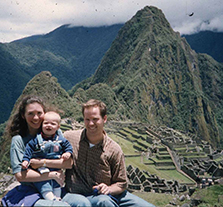 Photo courtesy Joseph Zunt
Dr. Joseph Zunt with his wife, Kay Johnson, MD, MPH, and son, Andrew Zunt, at Machu Picchu
Photo courtesy Joseph Zunt
Dr. Joseph Zunt with his wife, Kay Johnson, MD, MPH, and son, Andrew Zunt, at Machu Picchu
Why direct the Northern Pacific Global Health (NPGH) Fellows consortium for LAUNCH?
It is invigorating when the LAUNCH consortia come together each year in July at NIH. You walk into the room, you have over a hundred trainees from 40 plus countries, and it’s… it's palpable. You found your people. That warm, embracing feeling of altruism and desire to create new knowledge that'll improve health is just so appealing. That's one of my favorite weeks of the year.
Many good things come from that meeting. For example, our NPGH consortium trainees needed more methodologic training to improve their research, so we thought, “If we're doing it for our consortium, why don't we do it for all of them?” We started offering a workshop before the NIH meeting—rapid learning about research methodology. The workshop results in some of the fellows forming binational collaborations beyond their projects.
I’ve been fortunate to have mentored hundreds of U.S. and international medical students, residents, doctors and PhD students participating in research training opportunities in nine countries. One of the joys of directing NPGH is the fantastic group of collaborators involved in training the next generation of U.S. and international research scientists, as well as our outstanding program team members, who improve the program each year. Another joy is working with our Fogarty colleagues, who provide steadfast support.
What do you tell students who want to become global health researchers?
Follow your passions. When I was a fellow, a professor advised me to be careful when choosing a master’s thesis project, as it could end up becoming my career. HTLV-1 infection was my thesis project and I’m still collaborating on projects related to this infection.
Find a trusted collaborator in the country where you work—someone who can serve as a guide to local customs, introduce you to the local research community, and help you navigate cultural differences.
Ensure a good set of mentors. You may have one mentor who provides career advice, another who guides you on methodologic approaches to your research, and another who offers you leadership tips. Mentors connect you with learning and funding opportunities, and potential collaborators.
I see my role as a facilitator and a connector for students searching for a good mentoring team. I'm happy to talk, even though I may not become everyone’s mentor. I know a lot of people and can connect a trainee with those who may be a perfect fit.
Do you wish to add anything else?
Research capacity building is a very slow process, but if you look at where Fogarty-supported trainees are today, they are now leaders of institutions and government agencies who appreciate the benefits of their own training and are available to mentor successive generations of trainees. Innovation of devices and processes that improve health is a very tangible result of Fogarty’s—and the NIH’s—investments in research training.
More information
Updated February 13, 2026
To view Adobe PDF files,
download current, free accessible plug-ins from Adobe's website.