NIH Websites Are Changing
To reach its full potential, lenacapavir requires additional global health research
July/August 2026 | Volume 25 Number 4
 Photo courtesy of NIAID3D-printed model of the HIV capsid, the protein shell that encloses the virus’ genetic material
HIV is one of the world’s most serious health challenges and scientists have worked unstintingly to treat, prevent and cure it since the early 1980s. “The field has moved from crisis response to effective treatment, to treatment as prevention, to oral PrEP (pre-exposure prophylaxis), and now to long-acting prevention options. Each step has expanded what we believed was possible,” says Jared Baeten, MD, PhD, Senior Vice President, Clinical Development, Virology Therapeutic Area Head, Gilead Sciences.
Long-acting PrEP options now include lenacapavir, widely considered an exceptional drug. Lenacapavir was developed by Gilead Sciences, Inc. based on early-stage science conducted by academic investigators and research networks funded by NIH. It is an antiretroviral delivered as a shot just twice-a-year. The U.S. Food and Drug Administration approved use of it as PrEP just last year.
One of the researchers that led the clinical trials for the evaluation of lenacapavir as PrEP is Linda-Gail Bekker, MBChB, PhD, director of the Desmond Tutu HIV Center at South Africa’s University of Cape Town; her early training was supported by Fogarty while her current research projects are backed by Fogarty, the National Institute of Allergy and Infectious Diseases, and other organizations. Bekker led the PURPOSE 1 trial that evaluated the safety and efficacy of lenacapavir as PrEP in young women in Uganda and the Republic of South Africa. The PURPOSE program, funded by Gilead, included a PURPOSE 2 trial that enrolled geographically diverse populations of men across multiple countries. The combined enrollment was nearly 10,000 people on five continents.
Bekker’s PURPOSE trial results exceeded expectations. “No adolescent girls or young women receiving twice-yearly lenacapavir acquired HIV infection,” she and her co-authors noted in a 2024 paper published in The New England Journal of Medicine. A companion piece, also authored by Bekker’s team and published in Science, reported “zero HIV infections” among participants who received the drug during pregnancy. Importantly, “pregnancy outcomes—including rates of spontaneous abortions, stillbirths, preterm births, and small-for-gestational-age births—were consistent with background rates in South Africa and Uganda.” When she presented these results at the 2024 International AIDS Conference, Bekker brought the audience to its feet.
One attendee described this historic standing ovation as “deeply moving.” Diana Finzi, PhD, Acting Director of NIH’s Office of AIDS Research (OAR) at that time, added that lenacapavir is a “remarkable achievement” and “a testament to the value of NIH-supported basic science.”
Research & development
“Scientifically, lenacapavir is a first-in-class HIV capsid inhibitor with a mechanism that is distinct from other approved HIV medicines,” says Baeten, a former Fogarty fellow.
Finzi explains that early HIV science, funded by NIH, aimed to understand “the 3D structure of viral proteins and their interactions within infected cells.” Inside the structure of human immunodeficiency viruses is a capsid core, a cone-shaped container that is composed of individual capsid (CA) proteins. The capsid core transports the virus’ genetic information across the host (patient’s) cell and into the nucleus. During this process, the core protects the virus from any defense mechanisms mustered by the cell. In this way, the capsid core enables HIV to replicate, proliferate, and ultimately cause disease.
Once these processes and interactions were understood, scientists began developing approaches to disrupt them, explains Finzi. “Lenacapavir binds two neighboring CA proteins and creates improperly shaped core structures that are unable to enter the nucleus [of a cell] or produce new virus particles.” In short, the drug works because “it interferes with multiple steps in the HIV life cycle.” It’s important to note that Gilead developed and screened more than 4,000 molecules, starting in 2006, before identifying the final molecule that would become known as lenacapavir. Then it went into trials, which took more than five years, to prove efficacy and safety for both treatment and prevention.
While teams of scientists rightfully take credit for lenacapavir, Baeten notes that HIV drug development progress has always been driven by partnerships that extend far beyond the lab. “The advances we are seeing today are the result of decades of work by communities, advocates, clinicians, researchers, public health leaders, governments, and industry.” Similarly, extensive engagement with communities helped shape Gilead’s PURPOSE program.
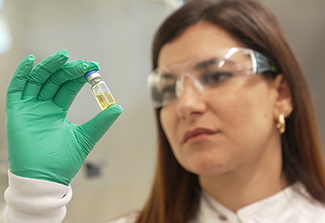 Photo courtesy of Gilead Sciences, Inc.Gilead researcher at work
Inclusion and access
Gilead wanted countries and communities most affected by HIV—many that have “historically been underrepresented in clinical research”—to participate in its clinical trials to test the drug, Baeten explains. The earliest trials, then, were conducted in South Africa, Uganda, Argentina, Brazil, Mexico, Peru, Thailand, and the United States. Within a year after the announcement of the earliest results, the U.S. Food and Drug Administration, the European Medicines Agency, and the South African Health Products Regulatory Authority approved lenacapavir for PrEP. Drug regulatory agencies in Brazil and Australia soon followed.
While additional approvals are pending, it is now available in 10 countries in sub-Saharan Africa, which Baeten says represents the fastest access in the region for any HIV medication. The rollout is “just getting started,” says Baeten. Gilead has “designed a broader global access strategy that includes voluntary licensing agreements and partnerships with organizations, including the U.S. President’s Emergency Plan for AIDS Relief (PEPFAR) and the Global Fund.” Through these agreements, Gilead aims to accelerate access to lenacapavir in “high-incidence, resource-limited countries,” where local regulatory approvals and access pathways are in place.
“Scientific breakthroughs only matter if they reach the people who need them,” says Baeten. He notes that, despite the availability of highly effective prevention tools, new infections still occur. “People need prevention options that fit their lives, their circumstances and their preferences.”
Preventing infections
Access to lenacapavir is undoubtedly significant when it comes to preventing new infections, yet another factor is equally essential: people using it. In most cases, studies that examine how people will use a new medical discovery are needed to achieve public health impact, writes Geri R. Donenberg, PhD, the current director of NIH’s OAR, in a blog post. As a young scientist she witnessed how new treatments transformed the lives of people living with HIV and decided, then, to center her work around an emerging discipline: “implementation science—the study of methods to promote the adoption and integration of evidence-based interventions into real-world settings to impact public health.”
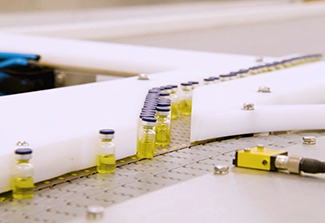 Photo courtesy of Gilead Sciences, Inc.Manufacturing lenacapavir
Implementation science is emphasized within Fogarty’s HIV programs in low- and middle- income countries. Fogarty-supported scientists seek to learn how long-acting prevention can be delivered in ways that are both practical and responsive to community needs. Unfortunately, uptake of daily PrEP pills has not been immediate or universal. As Bekker noted in her Science study, “PrEP use remains suboptimal among women, particularly in populations with disproportionate HIV incidence, including young women, women in Africa, women of color in the United States, and migrant women in multiple geographic areas.” Bekker says, given that a twice-yearly shot of lenacapavir could be dispensed to women during routine (and private) OBGYN visits, lenacapavir represents “a highly efficacious and discreet choice to potentially improve PrEP use among women.”
Meanwhile, researchers working in countries where HIV/AIDS is more prevalent—where scientific questions can be answered more efficiently—continue their investigation of lenacapavir. Baeten says, while the initial PURPOSE trials answered whether lenacapavir for PrEP is safe and effective, current studies seek answers about different matters, such as, “How can lenacapavir be implemented most effectively in different healthcare settings?” To this end Gilead, the Global Fund, and the U.S. government have committed to providing PrEP to three million people by 2028. Now studies can be done, by Gilead, Fogarty and other researchers, to benefit the regions where people are most vulnerable to HIV.
One day soon only a single question will remain: Can lenacapavir as PrEP fulfill its public health promise
Many scientists, including NIH Director Dr. Jay Bhattacharya, believe it can. At a recent Congressional hearing, he said, “Decades of NIH investments in basic science laid the groundwork for drugs like lenacapavir… A single injection lasting six-to-12 months offers near total protection against HIV acquisition. Together with other antiretrovirals also supported by NIH research, this provides a credible pathway for ending HIV transmission in the United States in coming years.”
More information
-
Breakthrough Lenacapavir Trial Builds on Decades of NIH Investment in Basic Science, NIH News, 2024
-
HIV acquisitions, safety, and pharmacokinetics of lenacapavir for HIV pre-exposure prophylaxis in pregnant and lactating women (PURPOSE 1): a substudy of a phase 3, randomised controlled trial,
Science, 2024
-
Twice-Yearly Lenacapavir or Daily F/TAF for HIV Prevention in Cisgender Women,
The New England Journal of Medicine, 2024
-
Five Takeaways on Ending the HIV Epidemic,
OAR Director’s Blog, 2025
-
NIH Director Dr. Jay Bhattacharya’s Congressional budget hearing, courtesy of C-SPAN
Updated August 14, 2026
To view Adobe PDF files,
download current, free accessible plug-ins from Adobe's website.