NIH Websites Are Changing
Rosamond Rhodes, PhD: Medical ethics from a constructivist perspective
March/April 2026 | Volume 25 Number 2
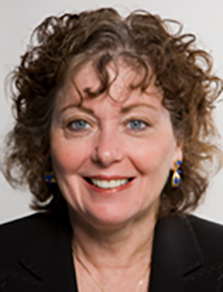 Rosamond Rhodes, PhD
More than three decades ago, Icahn School of Medicine at Mount Sinai first hired Rosamond Rhodes, PhD, to teach medical ethics. “I am a philosopher, so I do medical ethics from a constructivist perspective,” she explains. By constructivism, she means “we start with facts and then move towards principles and that makes it very compatible with medicine, which also starts with the facts.” (A doctor learns a patient’s symptoms before providing a diagnosis and then recommending a treatment.)
Along with teaching medical ethics in the U.S., Rhodes, who is now a professor at Icahn, has helped establish two Fogarty-supported research ethics master's programs beginning in 2012. One is in Belgrade, Serbia, the other, in Cluj-Napoca, Romania. “These programs aim to instill an understanding of ethics of research in the people who will serve on institutional review boards (IRBs) and as faculty and also as clinician researchers,” she explains. The first program in Belgrade trained participants from the Balkan region and seven different countries, including Romania and, in particular, Cluj-Napoca, which is a “tiny little village in a valley in Romania that has 10 universities where they educate people from around the world, teaching simultaneously in many different languages.” Graduates of the Belgrade program serve as faculty in Cluj-Napoca.
Both programs teach standard research ethics and provide the historical background of clinical trials, going back to the 17th century, says Rhodes. The curriculum touches on key ethical topics, such as the importance of institutional oversight, risks and benefits of research, informed consent, therapeutic misconceptions, and inducements for investigators. “In Belgrade, we did a survey of clinician researchers to find out what kind of education they’ve had in research ethics and what they want to know more about and AI kept popping up,” says Rhodes.
Over the past few years, Rhodes has extended her scope, via a secondary appointment, into “the AI and human health research unit at Mount Sinai where I work with people on the ethical concerns involved with AI use in medicine.” Though she’s quick to say she’s no expert in AI, Rhodes believes the principles guiding the ethical use of AI in global health research need to align with the existing ethical framework formulated for all research.
She notes that science is “doing away with a lot of informed consent by way of public health surveillance.” During COVID, for instance, scientists collected sewage sludge to find out which communities had more infections. No informed consent is needed for this type of research. “You might be embarrassed if, say, you live in Scarsdale, and they find out that there's more COVID in Scarsdale and now maybe somebody won't invite you to their New Year's Eve party. But beyond that, there's no risk from the research, so informed consent is not required.”
“Risks to participants, that’s where the emphasis should be for research ethics,” says Rhodes. “We need to follow the facts.”
More information
Updated April 22, 2026
To view Adobe PDF files,
download current, free accessible plug-ins from Adobe's website.
Related Fogarty Programs
Related World Regions / Countries
Related Global Health Research Topics