NIH Websites Are Changing
Sharing health data responsibly: A model for ethical collaboration
January/February 2026 | Volume 25 Number 1
 Photo courtesy of Michele Ramsey
Michele Ramsay, PhD
Photo courtesy of Michele Ramsey
Michele Ramsay, PhD
One of the biggest challenges that DS-I Africa scientists face is understanding how to manage and integrate data within their research projects.
“This ended up being far more complex than anybody anticipated,” says Michèle Ramsay, PhD. “The data comes from people who have generously given their samples and data, so managing that responsibly is interesting yet difficult." Ramsay, who is a professor in the Division of Human Genetics and the Sydney Brenner Institute for Molecular Bioscience at the University of the Witwatersrand (Wits) in Johannesburg, adds that what is challenging is "the negotiation with research groups about the data, making sure that ethics committees have approved the studies in line with the participant informed consent and that it's legal, and then combining data sets from different countries.”
Ramsay, along with Scott Hazelhurst, PhD, professor of bioinformatics at Wits, is a co-principal investigator for DS-I Africa’s Multimorbidity in Africa: Digital Innovation, Visualisation, and Application (MADIVA) research hub. MADIVA studies multiple chronic diseases in African populations using long-term health, demographic, and genomic data from the Africa Wits-INDEPTH Partnership for Genomic Studies for two communities, Bushbuckridge (Agincourt), South Africa and Nairobi, Kenya. MADIVA also uses data from the Health and Demographic Surveillance Site dataset as well as additional nested research studies.
A legal perspective
To help think through complex data issues and come up with guidelines for MADIVA, Hazelhurst turned to a PhD law student, Daphine Tinashe Nyachowe. The resulting published paper (and part of Nyachowe’s PhD thesis), Balancing protection of participants and other stakeholders with openness: African lessons from the MADIVA data sharing and access policy, is “about understanding how to share data from a legal perspective and an ethical perspective,” explains Ramsay.
Nyachowe and her co-authors begin by noting that research in low- and middle-income countries (LMICs) holds unique challenges, such as limited research infrastructure, fears of data exploitation, and the need to protect communities from harm or stigmatization. To address these issues, the MADIVA policy balances three interests: protecting research participants and communities; promoting open science; and safeguarding researchers and institutions. Guidelines set clear rules for who can access data, under what conditions, and when. The policy also allows for controlled data sharing, includes temporary embargo periods (so local researchers can publish their work), and requires ethical approvals and data security measures. The act of developing data sharing policies not only promotes fair data access but also strengthens collaborations, conclude the authors.
Additional MADIVA publications
MADIVA also has produced a review of the literature to uncover multimorbidity patterns and gaps in African-ancestry populations. The MADIVA team analyzed 232 publications from 2010 to 2022 and found diverse multimorbidity patterns among different African-ancestry populations, though cardiovascular and metabolic diseases were the most common. “The trend we saw was that, if people are studying diaspora populations, often one element of the multimorbidity was mental health, while in continental Africa, infectious diseases, such as HIV, malaria, or tuberculosis, feature within the multimorbidity spectrum as they contribute to multiple long-term conditions,” says Ramsay. Risk factors such as older age, female sex, and lower socioeconomic status were consistent with global trends, still the review identified a lack of translational research as one of several research gaps and emphasized that African Americans should not be treated as proxies for all African-ancestry populations. “We just don't have enough data representative of African regions and ethnic groups to develop robust conclusions,” says Ramsay.
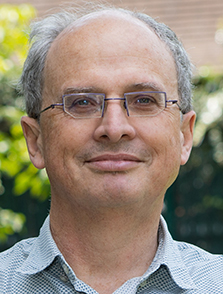 Photo courtesy of Scott Hazelhurst
Scott Hazelhurst, PhD
Photo courtesy of Scott Hazelhurst
Scott Hazelhurst, PhD
One other MADIVA publication, “the first from the machine learning side of the project,” aims to improve how multimorbidity is understood in African populations, says Ramsay. MADIVA employs “automatic stratification of the data,” a technique that does not begin with the researchers’ hypotheses, but instead uses machine learning to sort the data and so reveal, for example, which groups are overrepresented by multimorbidity or what the associated characteristics (such as a person’s age or cholesterol level) are. The findings show that certain high-risk groups appear consistently across both locations (in South Africa and Kenya), suggesting that these patterns are robust and transferable within the African context. Ramsay and her co-authors note that this work demonstrates how modern data science tools can complement traditional public health research, while laying a foundation for more context-specific and precise research to manage health conditions in Africa.
Additional MADIVA findings will be published soon, says Ramsay. For instance, the team is working on parallel papers that explore automatic stratification of data when applying different machine learning algorithms. One study isolates data from a subgroup of people who don’t have diabetes to understand the probability of them developing the disease in five years. Ramsay explains, “So we can stratify the data at baseline, and then stratify it again at a second time point, asking, ‘Who developed diabetes and who didn't,’ and then we can ask the data, ‘What are the characteristics of those people who developed diabetes five years later?’” The researchers can then use this information to develop tools or algorithms for early detection and possibly early intervention to mitigate risk.
Constructing networks
From her vantage point as director of the Sydney Brenner Institute for Molecular Bioscience, Ramsay sees how students and postdocs grow through interaction with colleagues. “It's well and good to say to a young scientist, ‘build up your network,’ but how do they do that? People build solid networks by working on projects like DS-I Africa and aiming to achieve something together.”
Meanwhile, Ramsay hopes for continued funding of DS-I Africa. Having worked with the NIH-funded Human Heredity and Health in Africa (H3Africa) consortium, she saw how researchers were able to amass data during the first five years but lacked enough time for analysis and collaboration. “That second five-year period of H3Africa was super productive,” says Ramsay. If DS-I Africa is given a similarly long trajectory, much more valuable knowledge will come out of its many projects.
“Science takes time, it's not something that you can rush.”
More information
Updated February 13, 2026
To view Adobe PDF files,
download current, free accessible plug-ins from Adobe's website.
Related Fogarty Programs
Related World Regions / Countries